

“I want my family to enjoy delicious tofu, even here in Malaysia!”
With that heartfelt wish, a woman with no prior experience in tofu-making began learning from scratch, mastering the craft, and eventually opened her own tofu shop.
At the Japanese Association Charity Bazaar held on November 5th, all 300 blocks of tofu she prepared sold out in no time. Her rich, flavorful, authentic tofu was a hit not only among Japanese customers but also loved by Malaysians. We spoke with Mariko Ejima, the founder and proprietress of Oedo Tofu, about her journey and passion leading up to the launch of her business.
What inspired you to start making tofu?
I’ve been living in Malaysia for 13 years, and I always wondered, “Why isn’t there any truly delicious tofu here?”
At first, it came from a simple desire: I wanted to feed my family something genuinely good. One of my children developed atopic dermatitis that wouldn’t heal easily, and that got me looking deeper into health foods. I started studying on my own, and over time, I became deeply interested in topics like fermented foods, Chinese medicinal cuisine, enzymes, macrobiotics, and molecular nutrition — basically, I turned into a bit of a health nerd.
Through all my research, I came to the conclusion that tofu was one of the best foods for building a healthy body, and that led me to start learning how to make it properly.
It must not have been easy to take on such a challenge in a foreign country with no prior experience.
That’s true. Fortunately, I was able to form a business partnership with Somenoya, a long-established tofu maker in Japan with a 160-year history dating back to the Edo period. They provided technical support and mentorship. They had already expanded to places like Spain, and we shared the same vision of bringing delicious tofu to the world.
In preparation for launching the business, I also trained at three different tofu shops in Japan. At one of them, in Shiramine, Ishikawa Prefecture, I was on-site learning how to make tofu starting from 3:30 in the morning.
I eventually earned my Tofu Meister certification from the Japan Tofu Meister Association.
The road to opening wasn’t easy — there were challenges like obtaining a business license, sourcing the right equipment, and more. From the initial business concept to actually producing the tofu, it took over a year.
It was by no means a smooth path, but thanks to the support and guidance from Somenoya, the National Tofu Association, JETRO, and many others, I was finally able to bring my tofu to market.
Tell us about your commitment to quality.
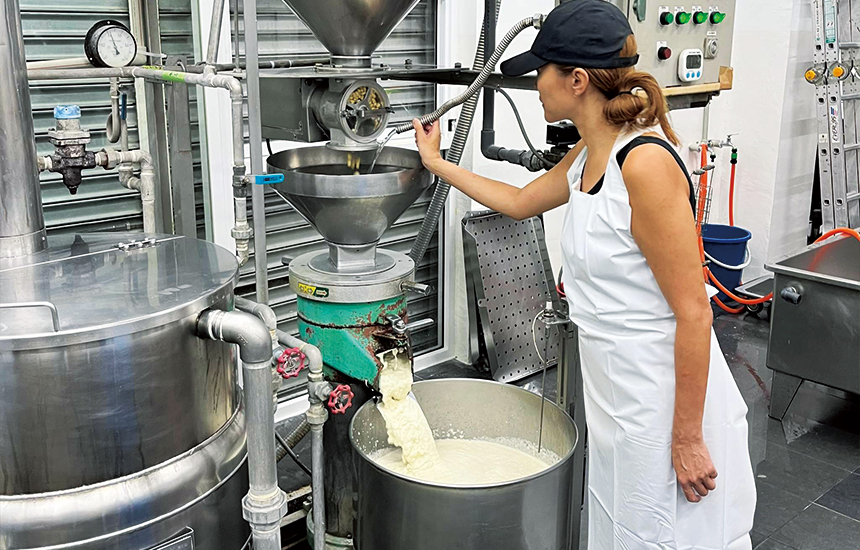
Most tofu sold in supermarkets is made with extended boiling times and fully automated processes. While this helps with shelf life, it often compromises the flavor. At Oedo Tofu, we use a traditional method that involves manual handling at key stages of production — just like it was done in the old days.
We are passionate about sharing the craftsmanship of traditional Japanese tofu-making with the world. And honestly, food made with care and time simply tastes better.
Of course, we’re also very selective about the ingredients and equipment we use.
We import non-GMO soybeans from Japan and use natural nigari (bittern) from Okinawa, essential for making tofu. All ingredients are chosen with a focus on being additive-free and gentle on the body.
The water we use is purified and softened to closely match the quality of water in Japan.
To achieve a richer, high-density tofu, we even imported specialized equipment directly from Japan.

What motivated you to take on this new challenge?
It was actually something my daughter said during her rebellious teenage phase that had a big impact on me — she casually remarked, “Mom, you’re not really doing anything, are you?” (laughs).
I could sense that she wanted to see a mom who was working and doing something inspiring. That really gave me a push.
Since giving birth, my life had revolved around raising my kids, but recently that stage has started to settle down. I began to feel a vague sense of unease, wondering, “What will be left for me once the parenting chapter is over?”
That’s when I decided to finally pursue something I’ve always wanted to do. I also had a strong sense that now is the time to put to use the knowledge and network I’ve built over my 20s and 30s.
What’s your secret to balancing work and parenting?
Our family starts the day early, so I try to make the most of the morning hours.
That said, when my kids were younger, I didn’t rush into things. I used whatever free time I had to learn about health and wellness, and to expand my circle of mom friends — and that knowledge and network have really helped in my business now.
Also, in Malaysia, it’s relatively easy to get help from babysitters or domestic helpers. I think it’s important not to overextend yourself and to know when to rely on others when something is beyond your reach.
What are your future plans?
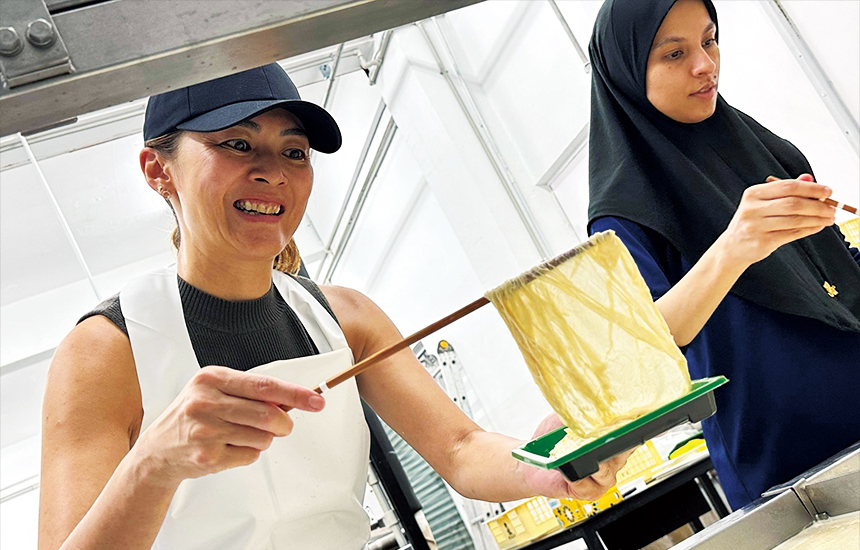
I’d love to set up a small café inside the shop where we can serve items like soy milk ice cream. By the end of this year, I’m also planning to start making deep-fried tofu products like atsuage.
Looking ahead to next year and beyond, I’m considering developing gift items such as tofu-based desserts.
Right now, I want to stay focused on perfecting our tofu-making process, so those ideas might take a little more time — but since tofu is great for both beauty and health, I see a lot of potential in branching out into products like isoflavone-based cosmetics and skincare items in the future.